
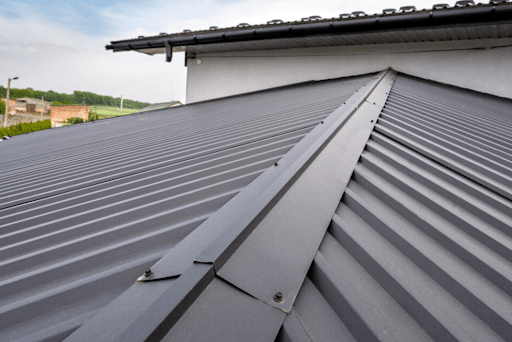
Metal roofing is surging in popularity as more aesthetic options have become available. Whether facing sun or snow, rain or ice, metal roofing can withstand the elements longer – and remain attractive and functional longer – than other roofing materials, making it the perfect option whether you are a homeowner or business planning new construction, or replacing an older or deteriorating roof.
In addition to its strength and sustainability, metal roofing can be repainted instead of being replaced, and according to the Metal Roofing Alliance, can last up to 50 years or more, increasing the resale value of your home or business – and it has qualities that can even lower your insurance costs. Before you get started, here’s everything you need to know about how to install metal roofing, from the right materials and accessories to the tools that make the job go smoothly.
Planning Your Metal Roof Installation
Metal roof installation rewards preparation. Before a single panel goes up, you need a clear picture of your roof’s dimensions, pitch, and structural condition. Start by measuring the total square footage and accounting for overhangs, ridges, valleys, and any penetrations like vents, pipes, or chimneys – each of these will require specific flashing and trim pieces.
Your roof pitch matters significantly. Different panel types are rated for different slopes, and understanding how to install metal roofing correctly on your specific pitch is the foundation of every other decision you’ll make. Low-slope roofs often call for standing seam metal roof installation, where concealed fasteners and continuous panels minimize the risk of water infiltration at low angles. Steeper pitches open up more options, including exposed-fastener styles like corrugated or PBR panels that are popular for agricultural buildings, commercial structures, and residential applications alike.
Local building codes are another consideration you shouldn’t overlook. Many Gulf South municipalities have specific requirements around wind uplift ratings, underlayment types, and fastener patterns – particularly in hurricane-prone coastal areas. Check with your local authority having jurisdiction before purchasing materials to confirm your metal roof installation meets code from day one.
What Materials Will I Need When Installing a Metal Roof?
Walker Metals can supply metal roof panels in a variety of colors, finishes, and styles. Your first task will be to order panels that complement your home or business color aesthetic and architectural style – but the panels themselves are only part of the picture. A successful metal roofing installation also depends on having the right supporting materials on hand before you start.
Here’s what you’ll need:
• Scaffolding or ladders to safely access and move across the roof
• Insulation to manage condensation between the metal panels and the decking below
• Shears to cut metal panels cleanly without distorting the edges
• Roofing felt or synthetic underlayment as a moisture barrier between the deck and your panels
• Drill and an assortment of drill bits, including hex-head drivers sized for roofing screws
• Staple gun for securing underlayment to the deck
• Chalk line for keeping panel rows straight across the roof
• Safety gear, including non-slip footwear, gloves, and eye protection
A word on underlayment: in humid climates like those across the Gulf South, condensation management is especially important. Synthetic underlayments often outperform traditional roofing felt in high-moisture environments because they resist tearing, don’t absorb water, and provide a more consistent surface for metal roof installation. Ask the team at Walker Metals about which underlayment option makes the most sense for your specific project.
What Metal Roof Accessories Will I Need?
Knowing how to install metal roofing means more than just laying panels – the accessories and trim components are what separate a watertight, professional-looking result from a roof that will cause problems for years to come. In addition to your panels, materials, and tools, make sure you have the following:
- Roofing Screws
Required to secure the panels to the structure. Use the correct screw for your panel type: exposed-fastener panels use screws with neoprene washers that compress to form a seal, while standing seam metal roof installation systems use clips or clamps that secure panels without penetrating the face of the panel. Always follow the manufacturer’s recommendations for screw spacing and pattern.
- Lap Tape
Applied to the top of lap ribs between overlapping panels to create a continuous seal. This step is easy to skip but critical for preventing water infiltration, especially on lower-pitched roofs.
- Pipe Flashing
Also called boot flashing, this is a contoured piece designed to fit snugly around pipes and vents that penetrate the roof plane, sealing the gap to prevent water from entering the structure.
- Trim
Depending on your roof style, you may need rake trim along the gable ends and eave trim along the lower edges. These pieces protect against wind-driven rain and give the roof a clean, finished look. Good trim makes a meaningful difference in the final appearance of any metal roofing installation.
- Ridge Vent
Installed at the peak of the roof, a ridge vent allows hot air and moisture to escape from the attic space continuously, without the visual interruption of box vents or turbines. This is a standard component on most residential metal roof installation projects.
- Valley Flashing
Placed at the intersection of two roof planes, valley flashing channels water safely down and away from the joint, preventing pooling or seepage under the panels.
- Transition Flashing
Used where two sections of the roof meet at different pitches, transition flashing seals the gap and prevents leaking at an otherwise vulnerable joint.
- Eave Flashing
Also known as edge flashing, eave flashing covers and seals the entire lower perimeter of the roof, protecting the fascia and the structural members below from wind-driven rain.
- Closure Strips
Foam or solid closures fill the open corrugations at the eave and ridge to block insects, debris, and wind from entering underneath the panels. These are a small but important detail, especially in agricultural and rural settings.
DIY vs. Professional Metal Roofing Installation: What You Should Know
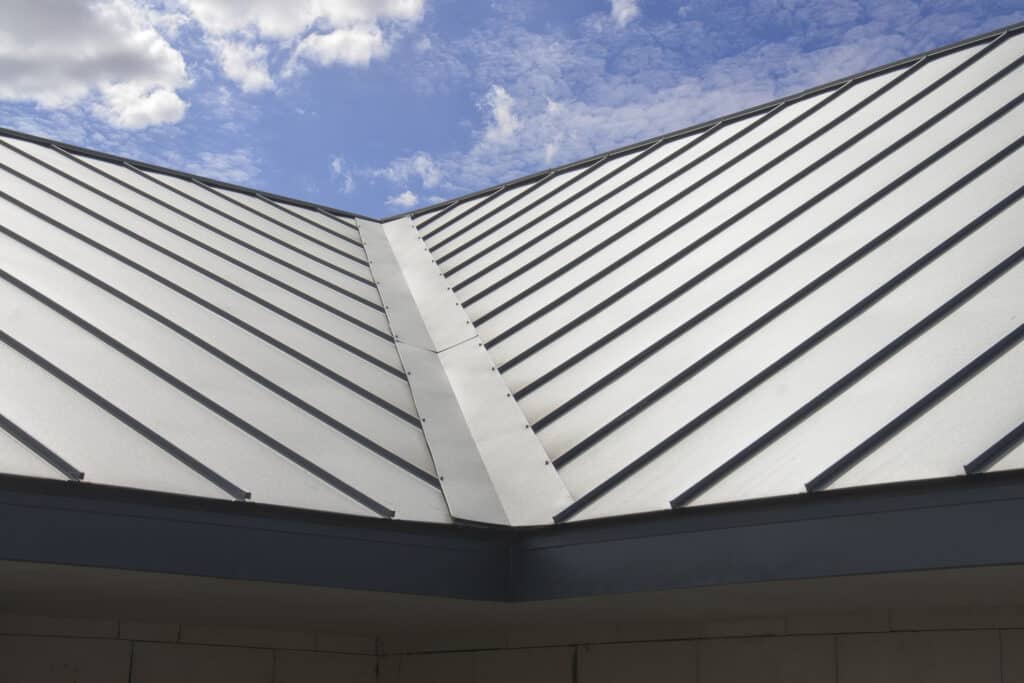
One of the advantages of metal roofing is that experienced DIYers can take on a straightforward residential project with the right preparation and materials. Panel systems like corrugated metal and PBR panels with exposed fasteners are among the more approachable options for self-builders. Standing seam metal roof installation, on the other hand, requires specialized tools – including a mechanical seaming machine – and is typically best handled by a trained contractor.
Regardless of which panel type you choose, a few guidelines apply across every metal roofing installation:
- Work with a helper.
Metal panels are light but long, and managing them on a roof alone is awkward and potentially dangerous. A second set of hands makes the job faster and safer.
- Start from the right point.
Most metal roof installation projects begin at the eave and work toward the ridge, with each panel overlapping the one before it. On gable-end roofs, start from one rake edge and work across. Getting your first panel perfectly square is critical – any error compounds across the length of the roof.
- Don’t overtighten your screws.
Neoprene-washer screws should be snug, not cranked down. Overtightening distorts the washer, which breaks the seal rather than improving it.
- Allow for thermal expansion.
Metal expands and contracts with temperature changes. Fastener placement and panel overlap dimensions are engineered to accommodate this movement – follow the manufacturer’s guidelines carefully.
If you’re not confident in any step of the process, the professionals at Walker Metals can connect you with experienced installation partners throughout the Gulf South who know how to get the job done right.
How Long Does Metal Roofing Installation Take?
The time required for metal roofing installation varies based on the size and complexity of the roof, the panel system chosen, and whether you’re working with a DIY crew or professional installers. A simple single-slope shed or agricultural building might be completed in a single day. A residential home with multiple roof planes, valleys, dormers, and penetrations could take three to five days or more.
Standing seam metal roof installation typically takes longer than exposed-fastener systems because the seaming process is more precise and time-consuming – but the result is a virtually fastener-free surface with superior weather resistance and a cleaner finished aesthetic.
Proper preparation before the work begins – having all materials, accessories, and tools on site and organized – is one of the most reliable ways to keep any project on schedule.
Why Metal Roofing Is Worth the Investment
Understanding how to install metal roofing is the first step, but it’s worth stepping back and appreciating why the investment makes sense. Metal roofing outperforms asphalt shingles in almost every category that matters: lifespan, weather resistance, energy efficiency, and long-term cost of ownership.
In Gulf South climates – where summer heat, tropical storms, and high humidity put roofing materials to the test year after year – metal consistently outperforms the alternatives. Reflective panel finishes can reduce cooling costs by bouncing solar heat away from the building. Interlocking panels and concealed fastener systems hold up under high-wind conditions. And unlike organic materials, metal doesn’t rot, crack, or become a food source for insects or mold.
When you factor in potential insurance savings, reduced maintenance, and the boost to resale value, quality metal roofing installation is one of the smartest long-term decisions a homeowner or builder can make.
Get Started with Walker Metals
Whether you are a homeowner or builder planning your own DIY roofing project, looking for a metal building kit you can erect yourself, or interested in a turn-key installation, Walker Metals has the products, materials, accessories, and personalized service to help you succeed. Our team can walk you through panel selection, accessory requirements, and everything else you need to know about how to install metal roofing on your specific structure.
Call the professionals at Walker Metals today for a no-obligation quote. We’ll make sure your metal roof installation is set up for success – at a great price: (225) 791-7791
